Plaklarınızı Nasıl Muhafaza Etmelisiniz? Plakları Doğru Saklama Yolları
Storing Them Properly
-
 1Use an inner sleeve. The inner sleeve is the only storage item that should regularly come into contact with the record. The best sleeves are composed of either a plastic liner within a paper inner, or as a round-bottomed plastic-only sleeve. Storing your record in one of these sleeves is essential to protect it from scratches and debris. These can be purchased both online and in local music stores.
- Most records come with paper sleeves. Avoid using these because as you slide your records in and out over time, the paper acts as fine grain piece of sandpaper that will add scratches to your vinyl.
-
 2Store in an outer sleeve. The outer sleeve covers the vinyl’s card sleeve, and it also prevents dust from gathering on the vinyl itself. Opt for the softer, roomier sleeves to avoid peeling off the record’s artwork. These can be purchased both online and in local music stores.
- Avoid the heavy gauge plastic sleeves. Over time, these can compress and stick to the record sleeve. When removed, they may damage the artwork.
- You can also use a vinyl bag that fits like a normal sleeve but has a large flap and adhesive strip on the outside to fully enclose the record.
-
 3Don’t drop a record into its sleeve. Avoid carelessly dropping a record into its jacket or sleeve. This can not only split the cover but it can also cause damage to your record including scratches and abrasions. Gently put away your records by slowly sliding the vinyl into the jacket or sleeve.
 -
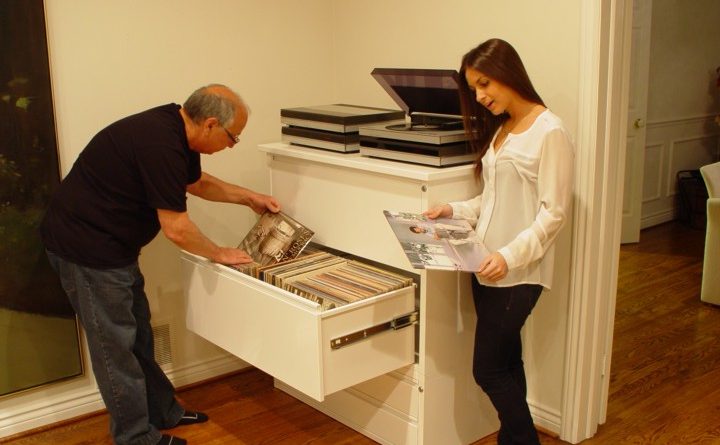
 4Invest in a shelving system. Once your records are properly encased, you’ll need a shelving system that is sturdy enough to hold your records in an organized manner. Opt for a shelving system that has built-in square shelves or inserts that will hold baskets or boxes. You can purchase inexpensive shelving systems from local furniture stores.
- Be sure to strengthen the system by adding L-shaped metal brackets to avoid having your shelving system lean to one side.
- Use dividers to help catalog your records for easier access. You can find record dividers online which allow you to write in categories, genres, or the alphabet.
- Never lay your records flat as this will cause them to warp. Store them vertically instead.
-
 5Choosing containers for archive storage. Opt for stronger materials that will support the weight of lots of records and avoid cardboard which can weaken over time. Avoid containers that won’t retain a static charge (wood over metal#, and loosely stack your records in an upright position.
- Try a heavy-duty, top down, plastic container with handles for easy transport.
-
 6Ensure proper environmental conditions. Vinyl records should always be stored in a dry, cool environment. Avoid storing them in direct sunlight, as the light and heat can fade the jacket artwork and warp the record. Never store records in extreme temperature or humidity. This can cause warping of the record. In addition, avoid storing in areas where the record will be exposed to a lot of dust or airborne particles.
- Avoid areas like basements that tend to have leaks and environmental extremes.
- Proper storage temperature is between 46-50 degrees° F, with 30-40% relative humidity.